
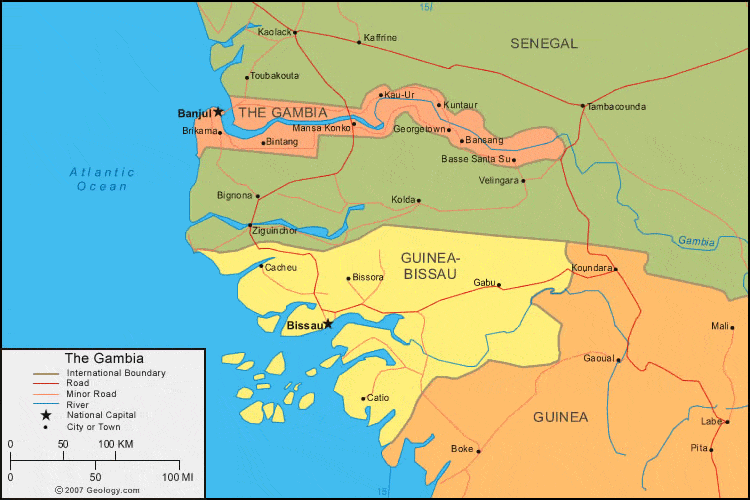
Named after its main river, the Republic of The Gambia is the smallest country in mainland Africa, it is 4,127 square miles in size with a population of around 12.4 million. The capital city and seat of government is Banjul, but the most populous district is Serekunda where around 390,000 people live. There are at least 9 different ethnic groups native to The Gambia, with Mandinka, Fula, and Wolof being the largest, with a long tradition of peaceful coexistence between the different groups. This is further reflected in religious tolerance, where the 96.4% Muslim, 3.5% Christian, and 0.1% tribal religion populations live in mutual respect, often celebrating each other’s festivals. Because of the broad range of tribal languages the majority of Gambians are multilingual, and the official language used in government and education is English.
Each year Project Gambia organises several trips to The Gambia. This is a vital part of the work we do as it enables students and staff from a number of schools and colleges, along with local community members, to work in partnership with Gambian communities to make a significant difference in a variety of settings to the lives of the Gambian people. This not only changes lives of people in The Gambia but also of those of us who visit The Gambia, so that Project Gambia is consistently achieving its objective of “changing lives…including yours.”